
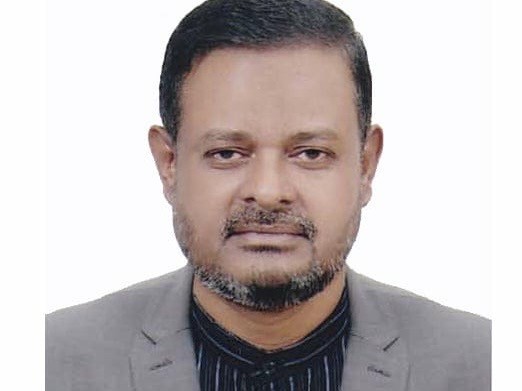
 রিপোর্টার : the investor
 Mohammad Tariqul Islam Zaheer is a leading entrepreneur in Bangladesh's frozen food and seafood export industry. As the Managing Director of Achia Sea Foods Limited and Sundarban Shrimps Private Limited, he has over 21 years of experience in seafood processing, export operations, supply chain management and business leadership.
After earning his Bachelor of Arts (BA) from Khulna, Mr. Zaheer began his career in the food processing industry and has since established himself as a respected voice in Bangladesh's seafood sector. As a Vice president Bangladesh Frozen Foods exporters Association (BFFEA), he actively contributes to industry development, policy advocacy and initiatives aimed at enhancing the global competitiveness of Bangladesh's frozen food exports.
Beyond his corporate responsibilities, Mr. Zaheer is actively involved in community service. He serves as Director of Service Projects of the Rotary Club of Rupsha (Rotary International District 3281) and is a Life Member of the Khulna Metropolitan Shooting Club, Khulna Shishu Foundation, and a Member of Khulna Club Limited.
Recently, Mr. Zaheer shared his insights on the opportunities and challenges facing Bangladesh's frozen food industry in an exclusive interview with The Investor, represented by its Executive Editor, Mizanur Rahman Liton.
Effective Policy Support Is Essential to Sustain Bangladesh's Frozen Food Industry
Interview by The Investor, Interviewee: Mohammad Tarikul Islam Zahir Vice President, Bangladesh Frozen Food Exporters Association (BFFEA)
The Investor: How would you assess the current state of Bangladesh's frozen food and seafood export industry?
Mohammad Tarikul Islam Zahir: In a word, the sector is under considerable pressure. Countries that compete with Bangladesh in the global seafood market have adopted coordinated national policies, invested in modern technologies and significantly increased production. Bangladesh, however, has yet to implement comparable reforms.
Our industry has an annual processing capacity of around 400,000 metric tonnes. However, because domestic consumption has increased while overall shrimp production has declined, only about 20 percent of total production is available for export processing. As a result, most processing plants are operating at only 10–12 percent of their installed capacity. This underutilisation has driven up production costs, overhead expenses and debt servicing, making it increasingly difficult for exporters to remain competitive.
The Investor: Is the current crisis mainly driven by rising domestic consumption?
Mohammad Tarikul Islam Zahir: Not entirely. The problem stems from two simultaneous trends: domestic demand has increased, while overall shrimp production has declined. Together, these factors have created a serious shortage of raw materials for export-oriented processing.
The Investor: The government considers frozen food a promising export sector. What policy support does the industry expect?
Mohammad Tarikul Islam Zahir: For more than a decade and a half, we have consistently urged the government to adopt practical, production-oriented policies similar to those implemented by competing countries. If Bangladesh wants to strengthen its position in the global seafood market, such reforms are essential.
A good example is vannamei shrimp, which now accounts for nearly 80 percent of global shrimp production. Despite years of discussion, Bangladesh has yet to fully approve commercial farming and exports of vannamei shrimp.
The current government assumed office only a few months ago. We have already shared our recommendations, and while some encouraging initiatives have been taken, they are still at an early stage of implementation. Until these policies deliver tangible results, ensuring the industry's survival remains the greatest challenge.
The Investor: Has your association taken any initiatives to encourage shrimp farmers?
Mohammad Tarikul Islam Zahir: This is beyond the capacity of individual companies or even the association alone. It requires coordinated government intervention.
Previously, the World Bank financed the Sustainable Coastal Fisheries Development Project, worth approximately Tk 25 billion, to improve hatcheries, train farmers, upgrade processing facilities and develop supporting infrastructure. Unfortunately, the project did not achieve its intended objectives.
Bangladesh does not lack policy frameworks; rather, the challenge lies in effective implementation.
The Investor: What are the major challenges facing shrimp farming in Bangladesh?
Mohammad Tarikul Islam Zahir: Scientific shrimp farming requires ponds with a water depth of around six feet, whereas most farms in Bangladesh have only two to three feet of water. As a result, shrimp fry are highly vulnerable to extreme heat, drought and heavy rainfall.
Modern shrimp farming also requires skilled manpower, advanced technology and significant investment. However, high bank lending rates, stringent collateral requirements and the absence of agricultural insurance discourage farmers from adopting improved production systems.
When farmers suffer major losses, they have no financial safety net. Consequently, many are abandoning shrimp farming in favour of watermelon, rice or freshwater fish cultivation.
The Investor: Is shrimp farming actually declining across the country?
Mohammad Tarikul Islam Zahir: Yes. Areas that were once dominated by shrimp farms are increasingly being converted to crop cultivation or freshwater fish farming.
Although Bangladesh's overall fish production continues to increase, shrimp production is declining. Traditional farming methods yield only 300–500 kilograms per hectare. By contrast, semi-intensive farming can produce around 10 tonnes per hectare, while super-intensive systems can achieve 20–30 tonnes per hectare.
The Investor: Are there successful examples of modern shrimp farming in Bangladesh?
Mohammad Tarikul Islam Zahir: Certainly. A vannamei shrimp farm in Cox's Bazar has produced approximately 23 tonnes per crop using modern farming techniques. This demonstrates that Bangladesh has the potential to achieve internationally competitive productivity with the right technology, training and policy support.
The Investor: What other factors are weakening Bangladesh's competitiveness in global markets?
Mohammad Tarikul Islam Zahir: Production costs have risen sharply. Electricity tariffs, wages, packaging materials and feed prices have all increased, while international shrimp prices have remained relatively stable.
Meanwhile, countries such as Vietnam, Indonesia, Ecuador and India have offset higher costs through advanced technologies and much higher productivity.
Another important issue is market access. Bangladesh previously enjoyed preferential duty-free access to European markets. India has now secured similar benefits through trade agreements, making competition even more challenging.
The Investor: Where do you see Bangladesh's greatest opportunities?
Mohammad Tarikul Islam Zahir: Bangladesh still has significant competitive advantages. Labour costs remain lower than those in China, Vietnam, Indonesia and even India. If we combine this advantage with modern farming technologies, scientific production methods, affordable financing, agricultural insurance and effective policy implementation, Bangladesh can regain a strong position in the global seafood market.
India provides a compelling example. Its shrimp production was once comparable to Bangladesh's. Through technological advancement and supportive government policies, India now produces approximately 1.2 million metric tonnes of shrimp annually. With the right strategy and effective execution, Bangladesh can achieve similar success.
The Investor: Are Bangladeshi exporters capable of meeting international food safety and quality standards?
Mohammad Tarikul Islam Zahir: Absolutely. We maintain international standards throughout the production process. All export-oriented processing facilities are EU-approved and operate in compliance with HACCP guidelines. Every export consignment undergoes laboratory testing and inspection before shipment, ensuring full compliance with international food safety requirements.
The Investor: Bangladesh's shrimp exports once faced quality-related concerns. Has the situation improved?
Mohammad Tarikul Islam Zahir: Yes. With digital traceability and much stricter quality control systems, such incidents have virtually disappeared. In recent years, there has been no significant case of Bangladeshi shrimp shipments being rejected because of quality issues.
The Investor: Why has Bangladesh's frozen food export earnings remained below US$1 billion?
Mohammad Tarikul Islam Zahir: The industry's processing capacity far exceeds the available supply of raw materials. Many factories are operating at only around 10 percent of capacity. Unless shrimp production increases substantially, export earnings will remain constrained.
The Investor: Why is vannamei shrimp considered so important?
Mohammad Tarikul Islam Zahir: Vannamei shrimp delivers significantly higher yields than traditional black tiger shrimp. Higher productivity lowers production costs and enables exporters to compete more effectively in international markets.
The Investor: What message would you like to convey to policymakers?
Mohammad Tarikul Islam Zahir: Bangladesh has all the ingredients to become a leading global seafood exporter. What we need now is timely policy support, effective implementation, modern technology, affordable financing and investment in skilled human resources. If these issues are addressed, the frozen food industry can once again become one of the country's strongest export sectors.